Loading...
Serving West Haven, CT and surrounding areas. (475) 550-3698
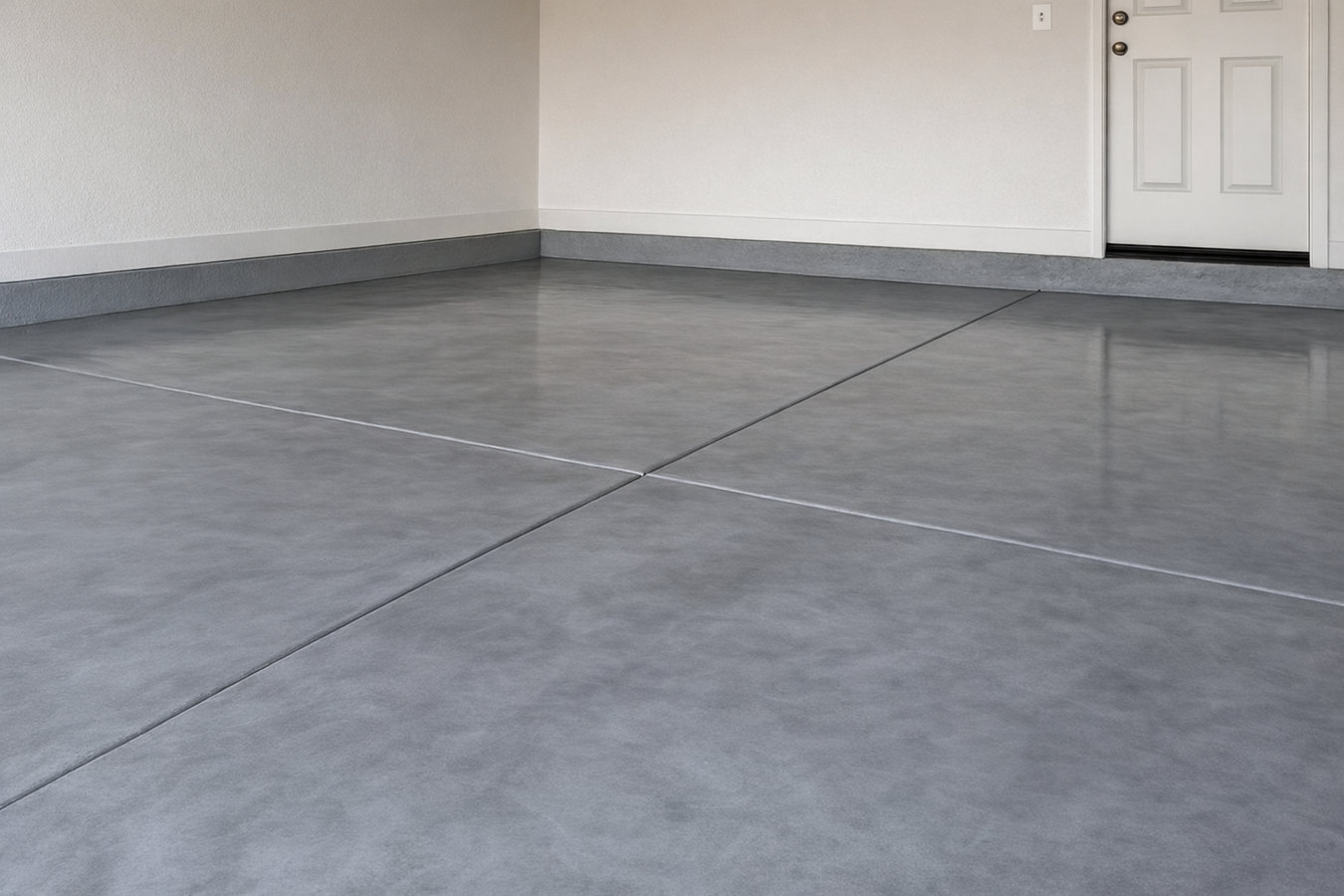
A cracked, damp, or uneven basement or garage floor makes the whole space hard to use. We pour level, properly sealed concrete floors built for Connecticut's winters and West Haven's coastal groundwater conditions.
Concrete floor installation in West Haven involves preparing the ground beneath the slab, pouring and leveling the concrete, and finishing the surface - most residential basement and garage floors take one to two days to pour, with a curing period of at least a week before heavy use.
The work starts well before the concrete truck arrives. Proper base preparation - removing old material, grading, compacting gravel, and laying a vapor barrier where moisture is a concern - is what separates a floor that lasts from one that cracks and shifts. In West Haven, where older housing stock and coastal groundwater are common factors, that prep work matters more than most homeowners realize. If you are also dealing with yard drainage issues, our concrete retaining walls service may be worth looking at alongside a floor replacement.
The American Concrete Institute provides guidelines on proper floor construction practices. We follow those standards and pair them with local knowledge of West Haven's specific conditions.
Small hairline cracks in older concrete are common, but cracks wide enough to slip a coin into - or where one side is higher than the other - mean the slab has shifted or settled. In West Haven's older housing stock, decades of freeze-thaw cycles working on the soil beneath the slab often cause this. Patching rarely holds long-term once cracking reaches this stage.
That white chalky residue on your basement floor is called efflorescence, and it means moisture is moving up through the concrete from below. Given West Haven's coastal location and higher soil moisture near Long Island Sound, this is a problem many homeowners here encounter. It will not improve on its own and gets worse over time.
A floor that is not level will collect water in the low spots, damaging anything stored there and creating conditions for mold. This is common in older homes where the original slab was poured without precise leveling. If water sits in the same spots every time it rains or after a spill, the floor has likely shifted or was never poured flat.
Surface scaling - where the top layer of concrete flakes off in patches - is a common result of road salt being tracked in on vehicles during Connecticut winters. Once scaling starts it spreads, and the rough surface becomes harder to clean and more prone to further damage. Replacement is more cost-effective than repeated patching at this stage.
We install concrete floors for basements, garages, utility rooms, and workshop spaces throughout West Haven and the surrounding area. Every installation includes proper base preparation, correct slab thickness for the intended use, and control joints placed to minimize uncontrolled cracking. For basement floors, we include a vapor barrier to slow moisture movement from West Haven's coastal soils. We handle permit applications with the West Haven Building Department and coordinate any required inspections.
We also handle concrete pool decks for outdoor concrete surfaces, and garage floor concrete for homeowners specifically focused on garage floor replacement or resurfacing. If your project calls for a decorative finish - staining, polishing, or texture - we can discuss those options during the estimate.
Suited for homeowners replacing an aging original slab or pouring a new floor in an unfinished basement they plan to use.
For garages with scaling, pitting, or uneven surfaces that have gotten worse with each Connecticut winter.
Practical broom or trowel finishes for laundry rooms, mechanical spaces, and workshop areas that need a durable, easy-to-clean surface.
For homeowners converting a basement into living space who want a stained or polished floor that looks finished rather than industrial.
West Haven's location along Long Island Sound means the soil in many neighborhoods holds more moisture than inland areas, and salt air can accelerate surface wear on concrete that is not properly sealed. For basement floors especially, the combination of higher groundwater and coastal humidity makes a vapor barrier more important here than in a drier inland town. Homeowners in Bridgeport face similar coastal conditions along the shoreline.
West Haven's residential neighborhoods include a significant number of homes built in the mid-20th century, many of which have original basement slabs that are now 50 to 70 years old. Some of these slabs were poured thin, without moisture barriers, or over soil that has since settled. If your home is one of these, your project may involve removing and replacing the existing slab rather than pouring over bare ground - which affects both the timeline and the cost. Homeowners in communities like Hamden often encounter the same older housing stock conditions. The EPA's guidance on basement moisture explains why vapor barriers matter in homes like these.
We ask about the space size, whether there is an existing slab to remove, and what you plan to use the floor for. We schedule a visit before giving you a written estimate - the condition of your existing floor and site access both affect the price. We reply within one business day.
For most concrete floor projects in West Haven, we apply for a building permit with the city's Building Department before any work begins. This is normal and expected - permit processing typically takes a few business days to a couple of weeks depending on the city's current workload.
Before we arrive, you will need to clear the area completely. If there is an old slab being removed, we break it up and haul it away first. We then grade and compact the base and install a vapor barrier if needed - this is the loudest part of the project.
We pour and level the concrete, finish the surface to the agreed texture, and cut control joints before the concrete hardens. After the pour, you can walk on it carefully in 24 to 48 hours but should keep heavy items off it for at least a week. We coordinate the city inspection before closing out the job.
We come to your property, look at the space, and give you a written quote with no obligation and no sales pitch.
West Haven's proximity to Long Island Sound means basement groundwater is a real factor in many neighborhoods. We include a proper vapor barrier in every basement floor installation - not as an optional add-on, but because skipping it in this climate produces a damp, chalky floor within a few years.
We file permits with the West Haven Building Department and coordinate the required inspection. You do not navigate the city's permit process alone. A permitted, inspected floor gives you documentation that protects you when you sell your home.
Many West Haven homes have original slabs from the 1950s and 1960s that were poured thin and without moisture barriers. We scope these replacements correctly from the start - proper demolition, base prep, and vapor barrier - rather than patching over a failing foundation.
Connecticut requires contractors doing residential work to hold a valid state registration. You can verify ours through the{" "} Connecticut elicense portal. We also carry liability insurance and workers compensation coverage - ask for proof before work starts on any job.
We take the prep work as seriously as the pour itself, because a well-built floor starts with what happens before the concrete truck arrives. That is what makes the difference in West Haven's climate.
Outdoor concrete surfaces around pools, built to handle Connecticut's weather and West Haven's salt-air conditions.
Learn MoreGarage-specific concrete work including replacement slabs and finishes that resist road salt and winter wear.
Learn MorePermit season fills up fast in Connecticut - reach out now to lock in your project date before the spring rush.